
Electric fences are one of the most reliable perimeter security systems for homes, estates, farms, and commercial properties. However, their effectiveness depends entirely on proper installation,
routine inspection, and correct voltage output.
Environmental factors such as vegetation growth, weather damage, corrosion, and electrical faults can reduce fence performance over time. A professional inspection ensures that the system continues
to operate at optimal voltage and remains compliant with safety standards.
This guide explains the complete electric fence inspection process, from the initial visual inspection through energizer testing and system verification.
An electric fence delivers high‑voltage pulses through perimeter wires to deter intruders. If any part of the system becomes damaged or poorly maintained, voltage can drop and the fence may become ineffective.
Regular inspections help to:
• Maintain consistent fence voltage
• Detect tampering or intrusion attempts
• Identify structural damage
• Prevent power leakage
• Ensure compliance with safety regulations
Before starting the inspection, ensure that the correct tools and safety procedures are in place. Essential tools include an electric fence voltage tester, multimeter, fault finder, earth resistance tester, insulated gloves, insulated tools, and an inspection checklist.
Safety precautions include notifying the property owner or control room, switching the energizer to service mode if necessary, and confirming isolation from mains power before touching any components.
The inspection begins with a complete walk‑around of the fence perimeter. Technicians should look for:
• Bent or leaning posts
• Broken brackets
• Sagging wires
• Vegetation touching the fence
• Broken or rusted wire strands
• Cracked insulators
Vegetation should be cleared at least 100–300 mm from the fence line to prevent voltage leakage.
The physical structure of the fence must be inspected carefully. Fence posts must be firmly anchored and correctly spaced. Wall‑top brackets should not be rusted or loose, and all anti‑climb wire spacing should remain intact to prevent intruders from bypassing the fence.
Electrical continuity across the fence line must be verified. High‑voltage cables should be inspected for cuts, UV damage, or exposed copper. All connectors and crimps must be tight and corrosion‑free. Lightning diverters should also be inspected to ensure the system is protected against electrical surges.
The earthing system is critical to the performance of an electric fence. Typically, at least three earth rods should be installed and spaced 1–3 meters apart. Using an earth resistance tester, ground resistance should ideally measure below 5 ohms and never exceed 10 ohms.
The energizer is the core component of the electric fence system. It should be securely mounted, protected from weather, and installed inside a lockable enclosure. The mains supply, fuse condition, and backup battery must be checked.
Backup batteries usually operate at 12 volts and should measure between 12.6V and 13.8V.
After inspection, switch the energizer on and measure output voltage using a fence tester. Typical security fence voltage ranges between 5,000V and 10,000V, with optimal performance generally around 7,000V to 9,000V.
Voltage should be measured at several points along the fence line: near the energizer, midway along the perimeter, and at the furthest point. Voltage should remain consistent across the system. Large voltage drops may indicate vegetation contact, broken wires, or faulty insulators.
Technicians should simulate a fault by briefly grounding a live wire. The energizer should detect the voltage drop and trigger the alarm output, confirming that the system correctly detects intrusion attempts.
Electric fence installations must comply with safety standards such as SANS 10222‑3 in South Africa.
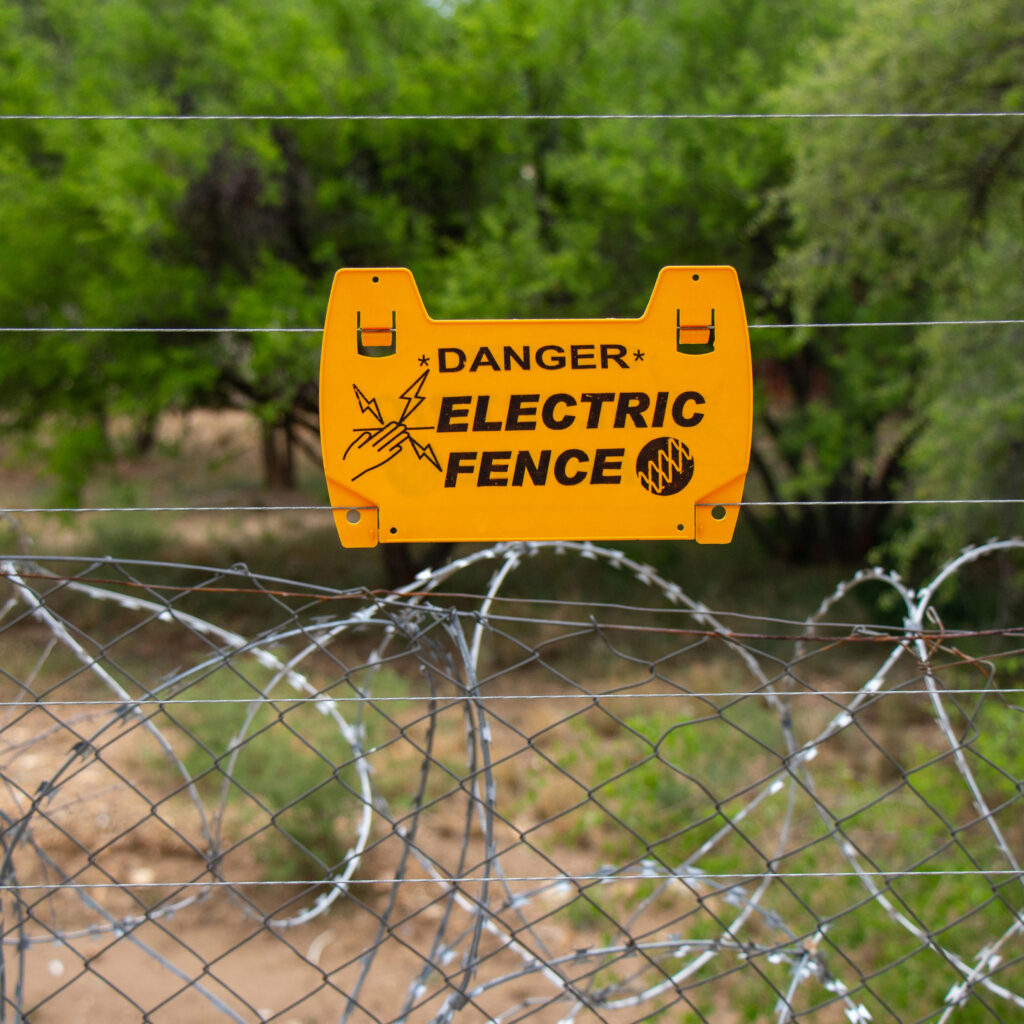
Warning signs must be placed every 10 meters and the fence must not be accessible from public pathways.
Proper earthing and certified energizers are required for compliance.
A complete electric fence inspection evaluates structural integrity, electrical continuity, earthing performance, and energizer functionality. By following a systematic inspection process, property owners and security professionals can ensure that their electric fence remains a reliable first line of defense against intruders.
We recommend that you get your electric fence tested and maintained by a competent professional company.
Our recommendation is Pure Security, you can contact them below or click here to check their website.
If you want to give it a go yourself we have created an Electric Fence Inspection Checklist which you can dowload for free below.